Currently accepting same-day emergency patients across Louisville, KY. Average callback time is under 12 minutes.
Dental Veneers in Louisville, KY: Porcelain Veneers Built for Your Face
Custom Porcelain and Composite Veneers in Louisville, KY
Emergency Dentists Louisville offers dental veneers for the entire Louisville area. Veneers are thin, custom-crafted shells bonded to the front of your teeth, and veneers can change the visible shape, shade, length, and symmetry of selected front teeth: shape, color, length, and symmetry, all chosen deliberately instead of left to genetics and coffee.
They can hide chips, close gaps, mask discoloration that does not respond well to whitening, and straighten the look of mildly crooked teeth, often in just two or three visits. Here's the honest, complete picture, including the part about enamel that every veneer page should lead with.
Tell us what's going on. We'll call you back fast.
We'll respond same-day. If you need to be seen right now, call us directly at 502-709-6108.
Porcelain and Composite Dental Veneers in Louisville
Our dental veneers in Louisville, KY correct chips, gaps, permanent staining and irregular tooth shape with custom restorations planned around your tooth proportions, smile line, neighboring teeth, and desired shade. We are the Louisville practice that treats any underlying decay or gum disease before starting elective work, because veneers laid over an untreated problem fail early and expensively.
What Veneers Can Fix
Veneers earn their reputation by solving several problems at once, on one tooth or across your whole smile zone:
Chipped, worn, or slightly uneven front teeth
Deep stains and discoloration that professional whitening can't lift
Gaps and small spaces between teeth
Teeth that look too short, too narrow, or misshapen
Minor crookedness, giving a straighter look without orthodontics
What veneers can't fix matters just as much: significant misalignment or bite problems need orthodontic treatment first, and teeth with active decay or gum disease need to be healthy before any cosmetic work. Sometimes the honest recommendation is whitening or simple bonding instead of veneers entirely, and when that's true for you, that's what we'll say.
Porcelain vs. Composite Veneers
Porcelain VeneersCustom-crafted in a lab from ceramic that mimics natural enamel's translucency and shine. Exceptionally stain-resistant and durable, lasting 10 to 15 years or more with proper care. A durable, highly esthetic option, requiring two to three visits.
Composite VeneersSculpted directly onto your teeth from tooth-colored resin, often in a single visit at a lower cost. They typically last 5 to 7 years, can pick up stains over time, and are easily repaired and polished, a great fit for younger patients and smaller fixes.
The choice usually comes down to budget, timeline, and how long you want the result to last before its first refresh. We'll show you examples of both on cases like yours so the decision is concrete, not abstract.
The Veneer Process, Visit by Visit
1. Consultation and Smile Design
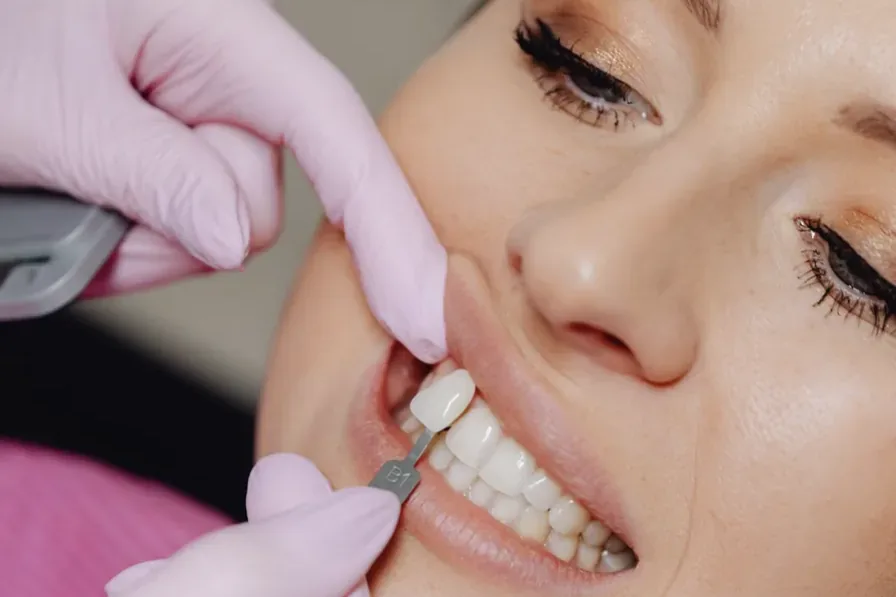
We examine your teeth, confirm they're healthy candidates, and design the result with you: shade, shape, and length, using photos and shade guides so you can see the destination before committing to the journey.
2. Preparation and Temporaries
For porcelain veneers, a thin layer of enamel (typically about half a millimeter) is removed so the veneer sits flush and natural rather than bulky. Digital impressions go to the lab, and you wear natural-looking temporaries while your veneers are crafted.
3. Bonding Day
Each veneer is tried in, adjusted for fit and color, then bonded permanently and polished. The bond between etched porcelain and enamel is remarkably strong, which is why well-made veneers stay put through years of normal eating and speaking.
Do Veneers Ruin Your Teeth?
This is the fear underneath most veneer hesitation, so here's the unvarnished truth. Traditional porcelain veneers require removing a small amount of enamel, and enamel does not grow back. That makes veneers a permanent commitment: the prepared teeth will always need veneers (or crowns) covering them. Any dentist who glosses over that isn't giving you the full picture.
But "permanent commitment" is not the same as "ruined." The prepared tooth stays alive and healthy underneath, the amount removed is conservative (about the thickness of a fingernail), and the bonded veneer restores the prepared front surface, but the tooth still requires normal brushing, flossing, professional care, and future maintenance or replacement of the veneer. Done well, veneers protect what they cover. The real keys are candidacy and honesty: healthy teeth, conservative preparation, minimal-preparation or no-preparation veneers only when tooth position, enamel thickness, bite, and the desired cosmetic change make them appropriate, and a frank conversation about whether whitening or bonding could achieve your goal reversibly first. Night grinders also need a custom nightguard, because porcelain, like enamel, doesn't appreciate being ground against all night. That's the complete picture, and it's yours before anything touches your teeth.
Cost, Longevity, and Care
Veneers are priced per tooth, with composite costing meaningfully less than porcelain, and most smile makeovers involve anywhere from a single veneer to the six or eight teeth visible when you smile. Because veneers are cosmetic, dental insurance typically doesn't cover them, though repairs to damaged teeth sometimes qualify for partial coverage, and Financing options available spread the investment into monthly payments. You'll get a written, per-tooth price before deciding anything. If bad stains are your main complaint, it's worth confirming first whether professional teeth whitening could get you there for far less.
Caring for veneers is pleasantly ordinary: brush and floss daily, keep up your cleanings, don't use your front teeth as bottle openers or fingernail tools, and wear that nightguard if you grind. Porcelain resists coffee and wine stains better than natural enamel does, which is a perk owners come to love.
Why Choose Emergency Dentists Louisville
Design-first veneers: you approve the shade, shape, and length before any tooth is prepared.
Porcelain and composite options, recommended by fit for your case and budget rather than by price tag.
Conservative preparation, including minimal-prep approaches whenever your case allows.
Honest alternatives offered first, because sometimes whitening or bonding is the smarter, reversible answer.
Porcelain veneers typically last 10 to 15 years or longer with good care, while composite veneers last around 5 to 7 years before needing refresh or replacement. Nightguards for grinders and sensible habits stretch both numbers.
Are veneers permanent?
Yes, traditional porcelain veneers are permanent because a thin layer of enamel is removed during preparation. The teeth will always need veneers or crowns afterward, which is why we discuss reversible alternatives first.
Does getting veneers hurt?
No, preparation is done under local anesthetic and most patients report little more than mild sensitivity for a few days afterward. Bonding day itself is comfortable and anesthetic-light.
How many visits do veneers take?
Porcelain veneers typically take two to three visits over a few weeks: design, preparation with temporaries, and bonding. Composite veneers can often be sculpted and finished in a single appointment.
Will my veneers look fake?
Not when they're designed well, since modern porcelain mimics the translucency, texture, and light reflection of real enamel. The shade and shape are matched to your face and neighboring teeth, and the most common compliment veneer patients report is that nobody can tell.
Design the Smile. Then Wear It Every Day.
One consultation shows you what veneers could do for your specific teeth, with honest pricing and honest alternatives on the same page.