Currently accepting same-day emergency patients across Louisville, KY. Average callback time is under 12 minutes.
Dental Exams in Louisville, KY | Comprehensive Exams and Digital X-Rays
Comprehensive Dental Exams in Louisville, KY
Emergency Dentists Louisville offers dental exams for the entire Louisville area. We spend our days treating dental emergencies, which gives us an unusual perspective on exams: nearly every emergency we see started as a small, painless, completely fixable problem that nobody caught in time.
A comprehensive exam is how those problems get identified earlier, when treatment may be simpler and more conservative. Here's exactly what happens in the chair, what we're looking for, and why "nothing hurts" is not the same as "nothing's wrong."
Tell us what's going on. We'll call you back fast.
We'll respond same-day. If you need to be seen right now, call us directly at 502-709-6108.
Our Comprehensive Dental Exam and Digital X-Ray Services
Our dental exams in Louisville, KY use digital X-rays to find decay between teeth, bone loss around roots, infection at the root tips and early oral cancer long before any of it starts to hurt. We are the Louisville practice that catches these problems at a routine visit rather than at 9pm on a Saturday, and most major dental insurance is accepted so the exam usually costs you very little.
What's Included in a Comprehensive Dental Exam
A real exam goes far beyond a quick look for cavities. Here's the full checklist we run through, tooth by tooth and tissue by tissue:
Digital X-rays that reveal decay between teeth, bone levels, and problems brewing below the gumline, at a digital dental X-rays use low radiation doses and provide images that can be reviewed immediately
Tooth-by-tooth inspection for decay, cracks, chips, and wear patterns
Restoration check on every existing filling, crown, and bridge to confirm each is still sealed and doing its job
Gum health measurements, gently checking the pocket depth around each tooth for early signs of gum disease and bone loss
Oral cancer screening of your tongue, cheeks, lips, palate, throat, jaw, and neck for lumps, patches, or tissue changes
Bite and jaw evaluation, checking how your teeth meet and screening for grinding damage and TMJ issues
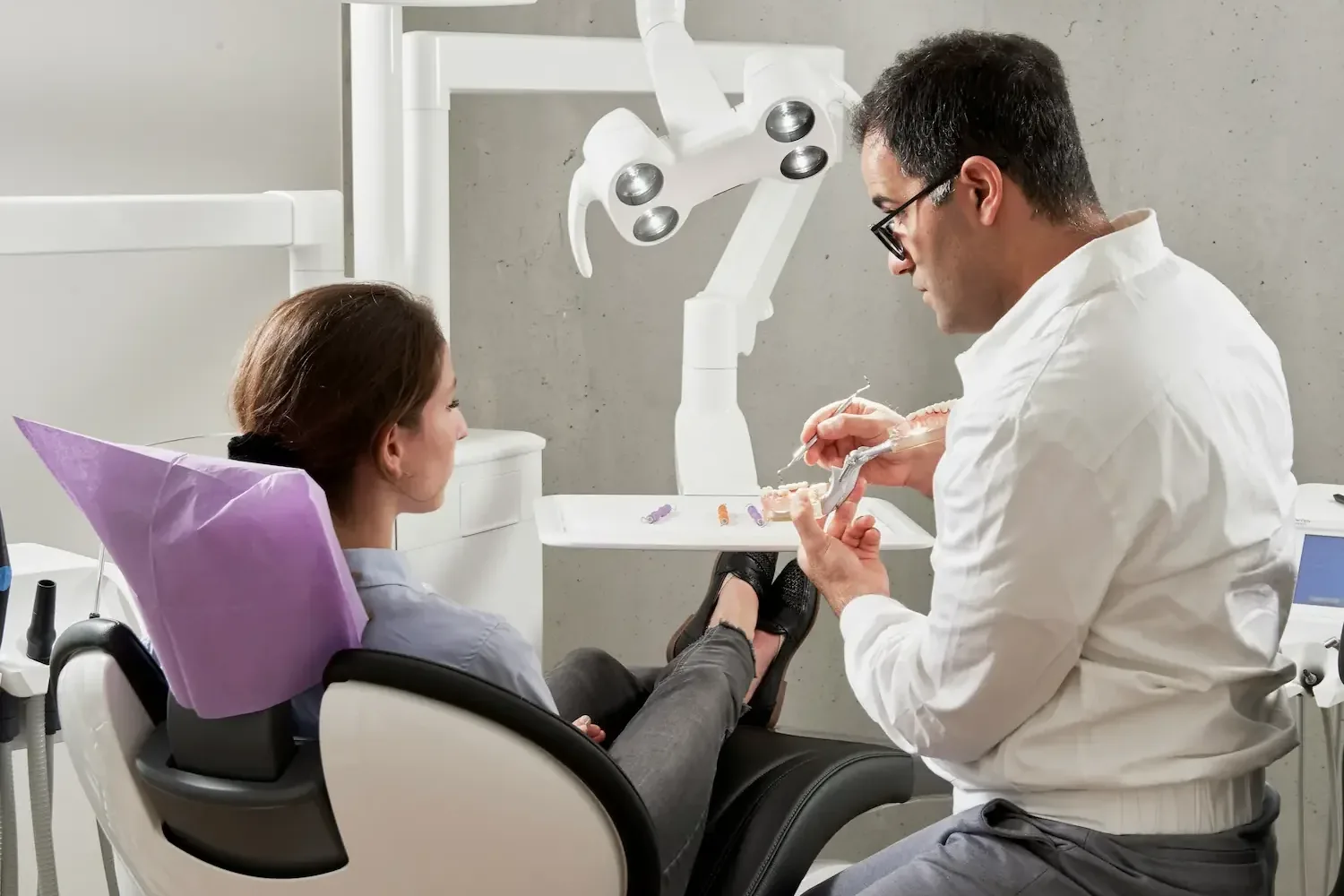
Afterward, we walk you through everything we found, in plain language with your X-rays on the screen, and build a prioritized plan if anything needs attention. New patient exams typically run 45 to 60 minutes; routine checkups are quicker.
Nothing Hurts. Do I Really Need an Exam?
This is the objection that keeps people away for years, so let's take it seriously. The uncomfortable truth about the two most common dental diseases is that tooth decay and gum disease can develop with few or no noticeable symptoms in their earlier stages. A cavity doesn't hurt while it's small and fixable with a simple filling. As decay progresses toward the pulp, treatment may become more involved and can eventually require root canal treatment and a restoration if the pulp becomes irreversibly inflamed or infected. Gum disease is even quieter: it destroys the bone holding your teeth with almost no symptoms beyond a little bleeding when you floss, and it's the leading cause of adult tooth loss.
Pain, in other words, is not an early warning system. It's a late one. By the time a tooth announces itself, the affordable window has usually closed. An exam is how you buy problems at their smallest, cheapest size. And the oral cancer screening carries the same logic with higher stakes: early detection dramatically improves outcomes, and your dentist is typically the first person positioned to catch it.
The math most people never see: a filling caught at an exam costs a fraction of the root canal and crown that same cavity becomes two years later. Skipping exams doesn't save money. It defers a much larger bill with interest.
How Often Should You Get a Dental Exam?
Many patients are seen about every six months, but the right exam and cleaning schedule depends on your oral health, cavity risk, gum health, age, and medical history, typically paired with a professional cleaning in the same visit. Some situations call for more frequent checks: active gum disease, a history of heavy decay, smoking, diabetes, or pregnancy all shift the schedule. Our teeth cleanings page covers what happens in the hygiene half of the visit.
If it's been years since your last exam, no lectures here. We see it constantly, and the right move is simply to start. The first visit establishes your baseline: full X-rays, complete charting, and an honest picture of where things stand. Most returning patients discover their mouths are in better shape than they feared, and for the rest, catching up now beats catching up later, every single time.
Cost and Insurance: Usually the Easiest Yes in Dentistry
Here's the part patients are often surprised by: most dental insurance plans cover exams, routine X-rays, and cleanings at or near 100 percent, because insurers know prevention saves them money too. That means the appointment that protects you from four-figure emergencies frequently costs you nothing out of pocket. If you don't have insurance, exams remain one of the most affordable services in the office, and we'll always tell you the price before you book. Whatever the exam finds, nothing happens without a written estimate and your go-ahead first.
Why Choose Emergency Dentists Louisville
An emergency dentist's eye for trouble: we treat the disasters, so we know exactly which small findings turn into them.
In-house digital X-rays with low radiation and instant on-screen review with you.
Oral cancer screening at every comprehensive exam, standard, not an upsell.
Judgment-free catch-up care for patients who haven't been seen in years.
One practice for everything: if an exam ever finds something urgent, the same emergency dentist in Louisville KY team treats it, often the same day.
Frequently Asked Questions
How long does a dental exam take?
A comprehensive new-patient exam takes about 45 to 60 minutes, including X-rays and the treatment discussion. Routine six-month checkups are shorter, especially when paired with a cleaning.
Is a dental exam the same as a cleaning?
No, they're separate services that are usually scheduled together. The exam is the diagnostic evaluation by the dentist, while the cleaning removes plaque and tartar, and most insurance covers both as preventive care.
Do I need X-rays at every exam?
No, routine checkup X-rays are typically taken about once a year, not at every visit. We take them only when they add diagnostic value, and digital sensors keep radiation exposure minimal.
What does the oral cancer screening involve?
A painless visual and physical check of your tongue, cheeks, lips, palate, throat, jaw, and neck that takes just a few minutes. Anything suspicious gets documented and referred for evaluation promptly.
It's been over five years since my last exam. What should I expect?
Expect a thorough baseline visit and zero guilt-tripping: full X-rays, complete gum charting, and an honest, prioritized picture of where things stand. Whatever we find, you'll get a written plan that starts with what matters most.
Find Problems While They're Still Small and Cheap
One hour, twice a year, is the best deal in dentistry. Book your exam and know exactly where you stand.